


White-Label Telemedicine Platforms: A Complete Overview
- helpdeskvcdoctor
- Jan 20
- 5 min read

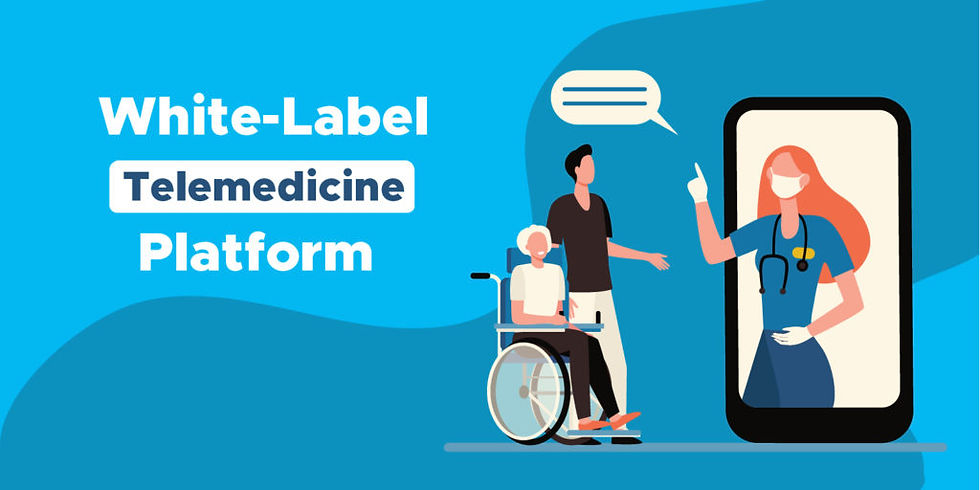
A white-label telemedicine application is a personalized digital healthcare solution that doctors can market as their own. Organizations can use the telehealth app to enter the virtual healthcare space efficiently without a comprehensive development process. It allows healthcare professionals to connect with patients, analyze their symptoms, and conduct diagnoses remotely. Further, a comprehensive treatment plan is suggested for patients. Through the white-label telemedicine platform, you can customize, rebrand, and resell as per your requirements.
What is a White-Label Telemedicine Platform?
The telemedicine platform is a portal you can create to provide healthcare to patients via the Internet. It allows healthcare professionals to assess, diagnose, and treat patients using telemedicine technologies remotely.
Now you can build it from scratch or use a white label telemedicine app development solution. With the help of a white-label telemedicine platform, you can customize, rebrand, and resell as per your requirements. A white label healthcare app offers not one but several advantages over a custom telemedicine application.
Key Features of a White-label Telemedicine Platform
1. Appointment Scheduling
The telemedicine software for doctors should have an appointment scheduling feature for maximum convenience. Using this feature, patients can easily schedule their appointments with just a single click. In case of any cancellation or rescheduling, it is also possible.
2. Video and Voice Calling
The telemedicine application bridges the gap. Through the video and voice calling feature, patients can be diagnosed remotely. Additionally, they get tailored treatment solutions in real-time. Many telehealth startups build telemedicine platforms and offer this feature.
3. Calendar Integration
Calendar integration is an essential feature in telemedicine apps as it helps you synchronize with your calendar. Additionally, it sends reminders for all upcoming events and appointments. This feature keeps patients and doctors organized.
4. Notifications and Reminders
Timely notifications and reminders are important to improve the patient’s compliance. This feature acts as the patient’s health manager. It sends reminders about medicines and appointments. Additionally, they can follow their treatment regimens easily.
5. Payment Gateway
A successful white-label medical app requires a secure payment mechanism. It guarantees patients that their data is safe, in addition to handling payments. To safeguard private financial data and ensure smooth billing transactions, the payment system needs to adhere to industry standards such as PCI DSS.
6. E-Prescription
Get your e-prescription once you are done with the consultation. You can save this prescription for further treatment.
7. Data Security and HIPAA Compliance
Patient data is stored in the cloud without fear of data breach. Physicians can access only limited data; thus, there is no chance of leaking their data.
Benefits of Having a Branded White-Label Telemedicine App
White-label telemedicine Data Protection
A telemedicine solution is secure and follows HIPAA rules. It protects patient and healthcare information when it’s installed on your server. Plus, it allows healthcare organizations to make internal communication hassle-free. There is no third-party interference, which provides security.
White-Label Telemedicine Patient Satisfaction
To stay competitive in the market, you need a branded telemedicine app. With a white-label solution, patients can easily connect with available doctors. Consequently, it increases their satisfaction and builds trust in your healthcare company. This sets you apart from the competition and gives your company more confidence.
Customization
If you want a top-notch app that works great, looks great, and has no bugs, a white label solution is the way to go. White-label lets you tweak features to make it the best for users. You can focus on your core competencies while leaving the app development and maintenance to the experts.
White-Label Telemedicine Cost-Effective
White-label Solutions not only save money but also save weeks/ months of development time. You can launch this solution instantly. And focus on giving competitive advantages to the providers.
Finer Connectivity and Branding
The white label healthcare app with your brand name helps you connect quickly and easily with your patients. It has cool features and makes it easier for you to provide excellent patient care.
White-label Telemedicine App Development Process
1. Market Research and Analysis
Thorough market research is the backbone of the entire white-label telemedicine app development process. Before getting into the development process:
Research the market in advance and read all emerging trends.
Conduct strategic planning and determine all important features to meet patients’ expectations.
Set a realistic timeline and budget while considering all complexities.
2. Security Protocol Establishment
A white-label telemedicine app must be designed and developed following all strict white label HIPAA software solution and PHI rules and regulations. Enforce a robust encryption model and integrate EHR systems for data safety and security. White-label telemedicine software must establish explicit authorization levels and access controls to guarantee that security precautions are in place and strictly adhered to. Regular risk assessments and tests are essential to finding and fixing possible vulnerabilities.
3. Customization and Branding
Customization becomes an essential part of building a white-label telemedicine application. It includes matching with the brand’s visual identity. Further, the logo, colour scheme, and overall user experience are customized for a seamless brand experience. The primary aim is to ensure that all aspects of the telehealth urgent care app align well with your brand.
4. Testing and Continuous Improvements
Before actually launching the application, a rigorous testing process is conducted to offer customers the best user experience. The testing ensures that the telemedicine app meets all set standards. Once the developers are satisfied, the application is launched. Post the launch, further updates and improvements are suggested for betterment.
Challenges and Considerations
Regulatory Compliance
One of the common challenges that organizations face during the development of white-label telemedicine platforms is regulatory compliance. You need to keep patient information safe and private and protect it from unauthorized access by following regulations like HIPAA Compliance.
Integration with Existing Systems
Sometimes integration becomes another challenge, and healthcare systems like patient record systems and billing software are unable to integrate with the white-label telemedicine platform. So, make sure to build a telemedicine platform that can easily integrate with healthcare systems.
User Adoption and Trust
You need to mainly focus on security parameters and ensure all the patient’s information is secured to gain the user’s trust. You can offer resources and support to help users feel confident using the platform.
Interoperability
Many organizations find it difficult to exchange data between healthcare systems. So, you need to make sure that the white-label telemedicine platform can easily exchange data between healthcare systems and establish balanced coordination.
Personalized User Experience
Many users left the platform because of the complex user interface and too many functionalities. Make sure to keep the user interface simple, clean, and easy to navigate. So that users can easily explore the options of the telemedicine platform and use it smoothly.
Original Source: White-Label Telemedicine Platforms: A Complete Overview


Comments